1-Bromo-2-Chloroethane: A Legacy of Versatility and Challenge
Historical Development
Chemists in the late 19th and early 20th centuries searched for halogenated hydrocarbons with promise in fields like organic synthesis and solvent technology. Among their discoveries, 1-Bromo-2-chloroethane found its place. Researchers originally drew up simple routes: starting with ethylene, adding chlorine and then bromine, or flipping the order, and tweaking conditions. At labs in Germany and England, pioneers documented its physical quirks and listed it alongside cousins like ethylene dibromide and ethylene dichloride. Over time, standards for purity and safe handling tightened as industrial demand and knowledge around organohalides grew, leading to more reliable supply chains and a clearer understanding of its properties.
Product Overview
Today, 1-Bromo-2-chloroethane stands as a specialty solvent, an intermediate for agrochemicals, and a building block for more elaborate molecules. Its two halogen atoms—a bromine and a chlorine—link directly to a two-carbon backbone, giving a neat balance between reactivity and physical toughness. Chemists see it as more reactive compared to dichloroethane, but a touch more controlled than dibromo analogs. Laboratories stock pure forms mostly for synthetic routes, and industrial outfits value its performance where precise halide introduction matters. Compared to its simpler relatives, formulation and transport require extra diligence due to its toxic nature and potential for release of corrosive fumes.
Physical & Chemical Properties
The compound brings a physical profile that seasoned chemists recognize fast: it takes form as a colorless to pale yellow liquid. It packs a sharp odor and a moderate density, around 1.6 g/cm³. With a boiling point near 119°C, this liquid doesn’t evaporate at room temperature the way lighter halides might, yet it still escapes into air easily if left unsealed. Its refractive index sits around 1.486, giving it a distinctive look under the lamp. Solubility in water runs low, but most nonpolar solvents dissolve it with little trouble. Its chemical behavior is classic for haloethanes: the carbon-bromine and carbon-chlorine bonds stand ready for nucleophilic substitution, a staple move for anyone building more complex organic molecules.
Technical Specifications & Labeling
Labels on commercial bottles spell out CAS number 107-04-0, UN number for transport, hazard symbols, and recommended safe storage temperatures. Technical sheets break down purity—typically better than 98% in analytical grade products—with trace levels of free bromide, chloride, and moisture. Labs demand tight specs for color, odor, and impurities that might interfere in downstream chemistry. Nearly all reputable suppliers trace their batch testing for compliance with GHS, including flammability, acute toxicity, and potential carcinogenicity, calling for PBT (persistent, bioaccumulative, and toxic) screening as environmental rules keep tightening. Date-coded lot numbers track shelf life, since organohalides can degrade if exposed to air or light.
Preparation Method
Direct synthesis leans on classical halogenation reactions. The most trusted route starts from ethylene, passing through controlled chlorination to produce 1,2-dichloroethane, followed by a substitution reaction with sodium bromide. This substitution typically involves reflux with a copper catalyst in polar solvents. There’s another route starting from 2-chloroethanol, reacting with hydrobromic acid under dehydration conditions. Industrial producers optimize temperature, pressure, and agitation to boost yields and cut byproducts, while ventilation and scrubbing cut down on hazardous releases. Waste brine and acid streams require careful treatment before discharge. Careful temperature ramps matter: if overheated, side reactions produce unwanted dihalide or even unplanned elimination products, which complicate purification.
Chemical Reactions & Modifications
Once in hand, 1-Bromo-2-chloroethane shines in organic synthesis. Its two different halogens make it a handy substrate for nucleophilic substitution, allowing chemists to add amines, thiols, or alkoxides one step at a time. It’s a common starting material in the formation of aminoethyl groups for agricultural and pharmaceutical agents. A reaction with sodium ethoxide, for example, replaces the bromine selectively, leaving the chlorine behind. Researchers frequently take advantage of the selective lability of the two halogen groups to build carefully designed molecules in multistep sequences. Grignard reactions adapt it to produce metal-organic complexes used in further coupling chemistry. At every stage, the product’s reactivity demands careful control of water and bases, otherwise side elimination or rearrangement can cut yields.
Synonyms & Product Names
In catalogs and literature, expect to see 1-Bromo-2-chloroethane also sold as Ethylene bromochloride, Ethane, 1-bromo-2-chloro-, and α-Bromo-β-chloroethane. These synonyms sometimes trip up new researchers—this chemical can’t be confused with 1,2-dibromoethane or 1,2-dichloroethane, which sport distinctly different properties. In international commerce, German and French labels list it as 1-Bromo-2-chlorethan or Bromo(chloro)éthane respectively. Laboratory bottles often highlight all major language variants to prevent mix-ups, especially where chemical inventories run multinational operations.
Safety & Operational Standards
Experience in the chemical lab hammered home how crucial real safety habits are with compounds like 1-Bromo-2-chloroethane. Vapors can irritate mucous membranes. Prolonged skin exposure may cause burns. GHS labels rate it toxic by inhalation, ingestion, and skin contact. Handling requires gloves—nitrile or neoprene—plus splash goggles and fume hoods vented to neutralizing scrubbers. Storage calls for cool, dark, and well-vented sites; incompatible with strong bases, active metals, and oxidizers. Spills must be tackled right away with absorbent materials that end up in hazardous waste. OSHA and REACH guidance both treat it as a chemical of concern. Employers must train staff on handling, first-aid, and emergency protocols. Even small leaks, left unchecked, pose long-term health hazards. Hospitals in chemical manufacturing zones still report accidental poisonings, a sobering reminder to never treat routine transfers lightly.
Application Area
Most often, 1-Bromo-2-chloroethane finds work as an intermediate. Agrochemical makers rely on it for selective introduction of halogens into pesticide or herbicide frameworks. Pharmaceutical teams sometimes grab it for scaffold modification. Its direct use as a solvent stays uncommon, but specialty organic syntheses—like preparing functionalized silanes or coupling agents—keep it in stock. The electronics industry occasionally chooses it for surface modification steps in polymer or silicon chemistry. Academic research teams run experiments probing new reaction mechanisms using its balanced reactivity. Over time, regulatory limits have trimmed uses where safer, less hazardous reagents exist, but its unique halide combination lands it on select shopping lists.
Research & Development
The last decade pulled greater focus onto design of processes that minimize hazardous byproducts. R&D chemists work on greener methods, pushing for solvent recycling and catalytic systems that deliver cleaner reactions with 1-Bromo-2-chloroethane. Developing new ligands that exploit its substitution behavior stands out in coordination chemistry circles. Analysts push for improved detection and quantification in environmental samples, since trace residues crop up downstream of manufacturers. In academic journals, new work describes asymmetric transformations, opening routes to chiral centers impossible using simpler halides. Progress in automation lets process chemists test dozens of reaction options in parallel, revealing faster, safer, and less polluting syntheses that can scale up for the factory floor.
Toxicity Research
Toxicologists classify 1-Bromo-2-chloroethane as harmful: studies have linked exposure to liver and kidney damage in animals, plus cancer risks at higher doses. Chronic contact leads to neurotoxicity and reproductive toxicity in some lab tests. Researchers agree it carries moderate acute toxicity, far higher than many common solvents, so strict exposure limits apply. Inhalation of small amounts can trigger headaches or dizziness, while higher exposures may suppress central nervous and respiratory function. Ecotoxicity studies show it sticks around in groundwater during accidental spills, breaking down slowly in natural environments. Current risk assessments recommend keeping workplace air levels below 1 ppm and avoiding disposal into open drains or soil. Antidotes are mostly supportive; where accidental exposure occurs, immediate medical care remains critical.
Future Prospects
Green chemistry advocates challenge industry to design alternatives that do the job of 1-Bromo-2-chloroethane but with lower toxicity and smaller environmental footprints. Emerging synthetic pathways aim to replace hazardous halogenated reagents, yet for now, a few applications still demand the exact properties this compound brings. Automation and precision dosing bring down exposure risks, especially in closed-loop manufacturing. Increased regulatory scrutiny could force even tighter restrictions, pushing investment toward comprehensive containment and waste treatment. Someday, advances in flow chemistry or biocatalysis may leave classic halide intermediates like this in the rearview mirror. Until then, careful stewardship of material, safer operating procedures, and continual research into health impacts define best practice in both plant and lab use.
Getting to the Root of the Formula
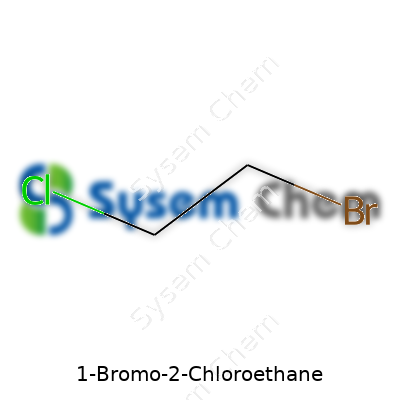
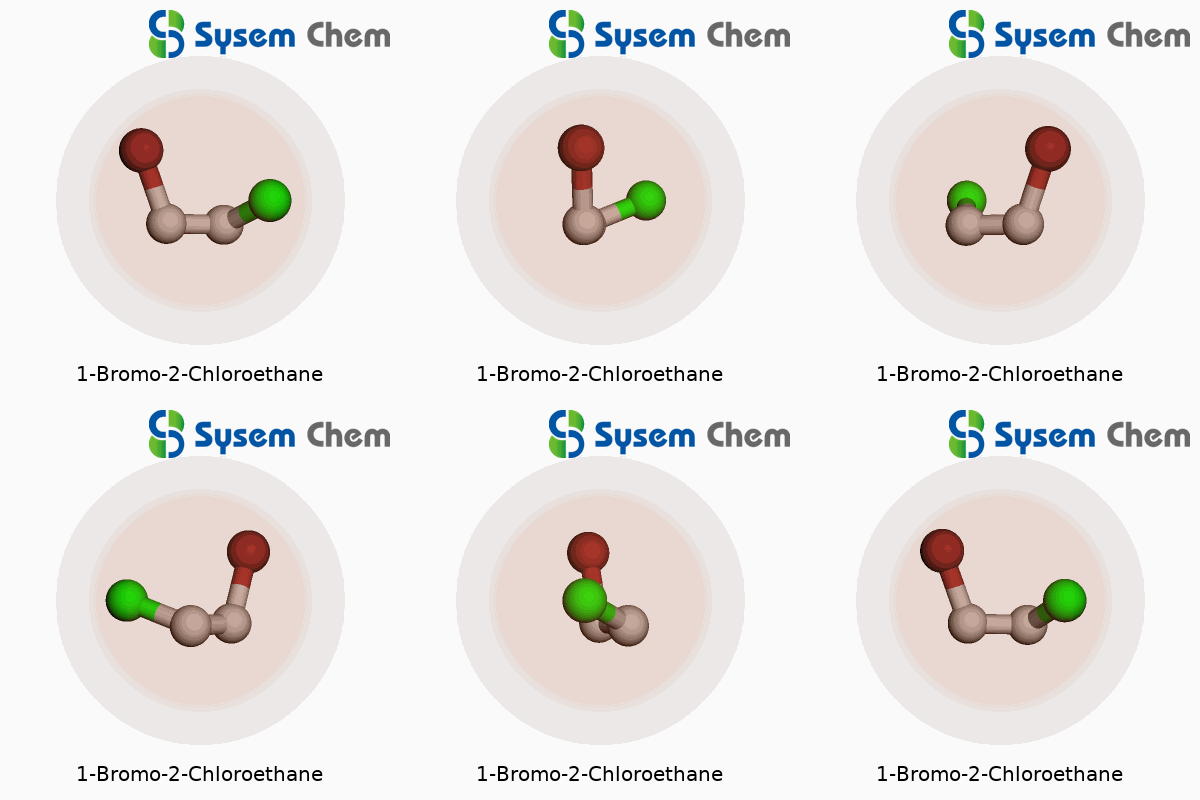
Chemistry sometimes feels like a puzzle that rewards those who spot patterns. The name “1-Bromo-2-Chloroethane” tells you almost everything about its structure. “Ethane” refers to a two-carbon backbone, the simplest chain found in organic chemistry behind methane. In this case, single bonds hold both carbons together, which sets the table for modifications—swapping out hydrogen atoms for other elements.
Reading the Name for Clues
A bromine atom changes the script. The “1-bromo” means a bromine atom sticks to the first carbon. On the second carbon, a chlorine atom replaces one hydrogen—hence “2-chloro”. Each carbon, in a basic ethane structure, would cling to three hydrogens. Adding bromine and chlorine replaces two of these hydrogens. Only two hydrogens stay on carbon one, with the rest balanced across the molecule. The structure winds up as C2H4BrCl.
Why Chemical Formulas Matter in Real Life
Knowing a compound’s formula seems like trivia until the practical world comes around. I once worked in a lab where a simple typo swapped a chlorine atom for a fluorine one. Unsafe reactions followed, which cost hours and dollars. Getting the formula straight can mean the difference between a safe procedure and a disaster.
Manufacturers, researchers, and emergency workers often rely on that formula without second-guessing it. Chemists in the pharmaceutical world skip hours of re-testing when formulas stay accurate. Years ago, during a college lab, a wrong label on a container sent our results off track until we double-checked the formula. Such mix-ups drive home how these tiny details anchor much bigger processes.
Health and Safety Impacts
Substances like 1-Bromo-2-Chloroethane aren’t just inert building blocks. Brominated and chlorinated ethanes may cause lung irritation or worse if handled carelessly. MSDS sheets base recommendations on the molecule’s structure. If the formula is off, goggles and gloves might not be enough. Years in labs and workshops taught me that even one wrong atom can trigger new hazards. The EPA and OSHA keep close tabs on chemicals like these due to potential impacts on humans and the environment.
Supporting Trust With Facts
Chemical formulas come from established naming systems like IUPAC, backed by years of practice and peer review. C2H4BrCl matches the expectations derived from structural drawings and hands-on testing. Trust grows when data and observation line up, and the formula for 1-Bromo-2-Chloroethane has stood up to both.
Finding Solutions in a World Full of Chemicals
Precision remains the antidote to confusion in chemistry. Label chemicals clearly, double-check formulas before starting work, and keep safety data accessible. Sharing correct information through trusted databases like PubChem makes research and industry safer for everyone. Good habits in naming and formula-checking work better than shortcuts every time.
Laboratory and Research Applications
1-Bromo-2-chloroethane often appears in labs that focus on organic synthesis. Chemists reach for this compound when they need a halogenated alkane—something that reacts in a predictable, controlled way. It acts as a building block for more complex molecules. For example, when researchers are making new pharmaceuticals or testing the limits of organometallic chemistry, they often use 1-Bromo-2-chloroethane to add both bromine and chlorine functionalities to their molecules. This little compound helps scientists understand reaction mechanisms, giving them a “test case” in a bottle.
Pharmaceuticals Industry
Drug developers use 1-Bromo-2-chloroethane during the process of designing new medicines. This compound steps in early, often as a reagent to introduce important chemical groups to more complicated molecules. Because it contains both bromine and chlorine, it brings flexibility—research teams play with the placement of these halogens to tweak the properties of potential drugs. In my time working with a contract research group, I watched my colleagues use this chemical to modify the backbone of anticonvulsant candidates, hoping to upgrade the way the molecules interact in the body.
Synthesis of Agrochemicals
Agricultural chemists use 1-Bromo-2-chloroethane when they test new pest control agents. Crop science research hinges on the ability to shift pieces of molecules around, searching for formulas that keep plants thriving but do less harm to everything else. This chemical plays a small but key role in synthesizing certain herbicide and insecticide components. Its structure gives researchers a useful starting point when exploring ways to improve both safety and effectiveness on the farm.
Intermediate in the Preparation of Dyes and Specialty Chemicals
Dyestuff manufacturing often calls for halogenated ethane derivatives like 1-Bromo-2-chloroethane. Coloring textiles and inks isn’t just about finding vivid shades—it also centers around making molecules that attach firmly to fibers and resist fading. Unlike some precursors, this one allows for different halogen substitution patterns, leading to a range of properties in the finished dye or pigment. Specialty chemical makers use similar reactions when they need unique bonding sites for custom products.
Use in Material Science
Manufacturers working with polymers sometimes turn to 1-Bromo-2-chloroethane to introduce reactivity into long chains. Say you want a new plastic with some unique electrical or thermal trait; polymers can be tough to modify, but this two-halogen molecule can make it possible. Reacting it with an existing polymer lets scientists create specialty plastics or coatings designed for specific jobs—such as better insulation or increased resistance to solvents.
Safety Considerations and Forward Steps
Compounds like 1-Bromo-2-chloroethane come with risks. It’s toxic if inhaled or absorbed through the skin, and can irritate the respiratory system, eyes, and skin. In labs I’ve worked in, handling this chemical always meant careful procedures: gloves, goggles, and a working fume hood. Chemical manufacturers need to support better training and improved equipment to keep workers safe. Labs and companies can invest in better detection tools and safer disposal methods, reducing exposure for both people and the environment.
1-Bromo-2-chloroethane isn’t as famous as some other industrial chemicals, but its versatility means it finds a place in several different worlds—from medicine and farming to dyes and materials. As chemistry learns more about health and environmental impacts, it makes sense to develop safer alternatives and tougher safety standards, so that this useful chemical’s story includes people’s well-being as much as technical achievement.
A Chemical That Demands Respect
Opening up a bottle of 1-Bromo-2-Chloroethane smells like trouble for anyone who's been in a research lab. This isn’t your everyday solvent—it's a compound that comes with a serious edge, both in terms of its uses and its risks. The mix of bromine and chlorine means it can cause skin burns and serious trouble if vapors drift your way without warning. People sometimes get complacent with chemicals, but this one always calls for genuine respect and strict precautions.
Personal Protection Is Not Optional
Splash exposure can leave lasting scars, so anyone using this chemical puts on a lab coat, nitrile (not just latex) gloves, and chemical splash goggles. You'll see folks double-glove or tape sleeves down before they even touch the bottle. People who've worked with solvents like this often share stories of someone forgetting proper gear—a quick dash to the safety shower, the sound of a fume hood alarm, and a ruined lab day. The danger becomes real fast and sticks in your memory.
Ventilation Saves More Than Comfort
Handling 1-Bromo-2-Chloroethane in the open sends vapors right into the air. It can irritate the lungs and set off a cough that lingers. Experience says a fume hood isn't just for show—it swallows all that vapor before anyone else can breathe it in. Doors closed, sash down, and waste straight into a sealed solvent container. Take shortcuts with ventilation, and you might end up with a headache that doesn't quit or something much worse.
Labeling and Storage: Not Just Bureaucracy
It’s tempting to cap a bottle, shove it in a corner, and move on. Patients who have lost track of one know the sudden panic when they discover a leaking bottle and the sharp chemical odor that follows. Proper storage keeps everyone safer. This chemical goes into flammable-liquid cabinets, away from acids or anything that might react in a messy way. Clear labeling in large print helps new lab members steer clear if they're not trained, and nobody wants an accidental mix-up mid-experiment.
Spills Happen—Know the Plan
Quick, effective spill cleanup prevents a small mess from turning into a full-blown emergency. Absorbent pads designed for organic chemicals mop up puddles, followed by a wash-down with soap and plenty of water. Labs I’ve visited kept a spill kit stocked in arm’s reach—no hunting through cabinets while fumes fill the air. Colleagues practice their response, so nothing gets left to chance if something tips over. Emergency numbers hang on the wall. No one wants to flip through a binder while they’re trying to keep everyone calm.
Education Shapes Safe Habits
Safety relies on people knowing exactly why certain steps aren’t skipped. Those who haven't had hands-on training sometimes take risks by accident. Demonstrating the reaction of 1-Bromo-2-Chloroethane with the wrong substances in class, watching a tiny explosion, leaves an impression that a thousand warnings never do. Sharing real stories—burns, splashes, and close calls—helps reinforce these habits more than posters or emails alone.
Improvements Start With Everyone
Some laboratories have started using digital checklists and QR code access for chemical storage. This pushes people to verify they've got the gear and space set up before starting work. Teams conduct regular drills and encourage reporting near-misses, since sometimes luck saves you—until it doesn’t. Learning from each incident builds a culture where safety isn't about ticking boxes but protecting each other, person to person.
Getting Real About Chemical Safety
Working in labs over the years, I learned pretty quickly there’s no shortcut when storing chemicals with names as unwieldy as 1-Bromo-2-Chloroethane. You want people heading home in good health, shelves intact, and no surprise regulatory headaches. This substance isn’t your kitchen cleaning spray. Slow leaks, reactive vapor, and a short circuit away from trouble—that’s real stuff folks deal with in research spaces, hospitals, or even specialized manufacturing.
Temperature and Environment: Less Drama, Fewer Accidents
1-Bromo-2-Chloroethane does not like sun or heat. I have seen storage areas go sideways because someone ignored basic advice: keep chemicals cool, dry, and off-limits to sunlight. A regular room, usually around 20–25°C, with no wild temperature swings works. Refrigeration isn’t necessary, but a shady corner far from heat vents and direct windows does just fine.
Anyone letting this sit near a boiler, radiator, or sunny shelf forgets how quickly things can boil and create pressure. Steam and heat push volatile compounds, so a spill or vapor release sneaks up when you least expect it. Humidity matters too; a dry space helps keep corrosion off lids and jars, avoiding contamination and sticky containers.
Container Choice: No Guesswork Allowed
Glass bottles with tight-sealing caps lead the pack for this chemical—solid, not reactive, and transparent enough to spot any changes in the liquid. Polyethylene and HDPE containers also do the trick, resisting most chemical attacks. If there’s ever a question, check with a chemical compatibility chart. Buying cheap, mystery plastics backfires. I’ve watched gaskets disintegrate, which never ends well.
Keep lids threaded on tight and steer clear of metal caps. Halogenated compounds like this can corrode certain metals over time, building up pressure or even cracking. Make sure labels stay legible—faded tape or smudges turn routine work into a guessing game.
Ventilation and Segregation: Not Just Busywork
Every chemical stockroom I’ve worked in runs on one core routine—store halogenated organics separately from acids, bases, and flammables. 1-Bromo-2-Chloroethane gives off vapors even at room temperature, and mixing vapors with acids spells trouble fast. A ventilated cabinet prevents vapor build-up, so no one loses their lunch—or worse—by opening a stuffy cupboard.
Flammable cabinets with spark-proof interiors help, but for this one, focus lands mostly on stopping leaks and containing fumes. I’ve always insisted on ventilation grates or fume hoods for storage, never old-school, sealed wooden cupboards. Fire lockers should resist corrosion, too, since halogen vapors do a number on cheap metal.
Spill Response: Nobody Wants Surprises
Every place storing 1-Bromo-2-Chloroethane ought to keep absorbent spill pads, nitrile gloves, and face shields within arm’s reach. Even a few drops, left too long, start to corrode surfaces and release nasty fumes. Training staff to spot cracked containers or weird smells means risks get handled before they snowball.
To sum it up, treat 1-Bromo-2-Chloroethane with respect—cool, dry storage in sealed non-reactive containers, plenty of ventilation, and a mind for real-world safety, not just what the label says. These small steps bring peace of mind and keep both people and property unharmed.
Looking at What Matters Most
Every so often, a chemical name comes up that makes people pause. 1-Bromo-2-chloroethane is one of those. It might not be a household word, but if you work in labs, chemical plants, or industrial settings, chances are you’ve seen it on a label or a material safety data sheet. People sometimes shrug off what they don’t understand. That’s a risky attitude, especially with something like this.
Direct Exposure Risks
1-Bromo-2-chloroethane carries real health hazards. According to the National Institute for Occupational Safety and Health, breathing in its vapors or getting it on your skin can trigger nausea, dizziness, and headaches. Those effects might seem minor at first. Over time, symptoms can worsen—the stuff can irritate eyes, hurt your lungs, and sap energy. Splashing this chemical onto skin opens the door for more severe reactions, including chemical burns. I once made the mistake of not gloving up before cleaning glassware splashed with halogenated solvents, and my hand tingled and turned red for a day. That wasn’t even this exact chemical, but the family it belongs to is notorious for causing trouble on contact.
Workplace exposure is the most common way people run into this chemical. I’ve seen older fume hoods that didn’t vent properly, and workers didn’t find out until headaches became the norm. Long-term, lab animal studies have shown liver and kidney effects, and some halogenated compounds are suspected of causing cancer in humans. Why risk it?
Environmental Impact
Most people don’t realize how quickly a small spill can spread. A single beaker’s worth can seep through the floor into drains or reach soil if not tackled the right way. 1-Bromo-2-chloroethane doesn’t break down easily in water or the ground. It sticks around and travels. The Environmental Protection Agency lists halogenated ethanes as hazardous, and it didn’t do that for fun. Over time, chemicals like this end up in waterways and groundwater, slowly poisoning the drinking water supplies and hurting wildlife. Even low levels can stress aquatic organisms, damaging gills and nervous systems.
Looking back, several towns near chemical depots fought contamination for years, their water soiled with byproducts from chemicals in this same group. Those communities learned the hard way that cleaning up persistent industrial chemicals drains resources, time, and trust.
Reducing the Dangers
Protection starts with making information easy to find. Don’t cram chemical safety updates in the back of a binder—put them where anyone can read them. Good training saves skin and lungs, and regular checks on ventilation systems catch leaks before people get hurt. It’s not enough to have safety showers and eyewash stations; people need to know how to reach and use them. In my own apprenticeships, supervisors insisted on drills—not just paperwork.
Finding safer chemicals or greener alternatives matters too. Many labs now push for solvents and reagents with shorter half-lives in the environment. When that’s not possible, strict protocols for handling, storage, and disposal offer the next best shot at keeping people and ecosystems safe. I’ve seen the difference a locked waste barrel and a logbook can make. One spill ignored, and it’s an all-hands-on-deck emergency. Catch mistakes early, and prevention turns into routine.
Hazardous chemicals like 1-Bromo-2-chloroethane aren’t going away soon, but that doesn’t mean carelessness gets a pass. Respecting the risks and learning from past mishaps keeps workplaces healthier and rivers clearer. That’s not alarmism—it’s just common sense from anyone who’s stirred a beaker and wondered about what’s left behind.