1-Bromododecane: From Origins to Future Applications
Historical Development
Long-chain alkyl halides have been part of industrial chemistry since the early 1900s, as companies chased better surfactants, lubricants, and synthetic intermediates. 1-Bromododecane started turning heads in the mid-20th century as chemists moved past basic brominated benzenes and began targeting longer linear molecules. Petrochemical industries were scaling up, so growth in aliphatic bromides followed. Old research journals hint at hand-blown glassware and the pungent aroma of ether — back then, bromination techniques leaned on harsh reagents, and yields bounced all over the place. The push for better yields and cleaner processes led to innovation in bromination methods, including safer handling and more selective reactions. 1-Bromododecane eventually became a staple in both research labs and industrial plants looking to build more tailored organic molecules.
Product Overview
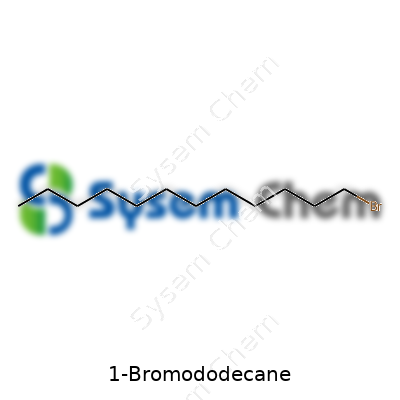
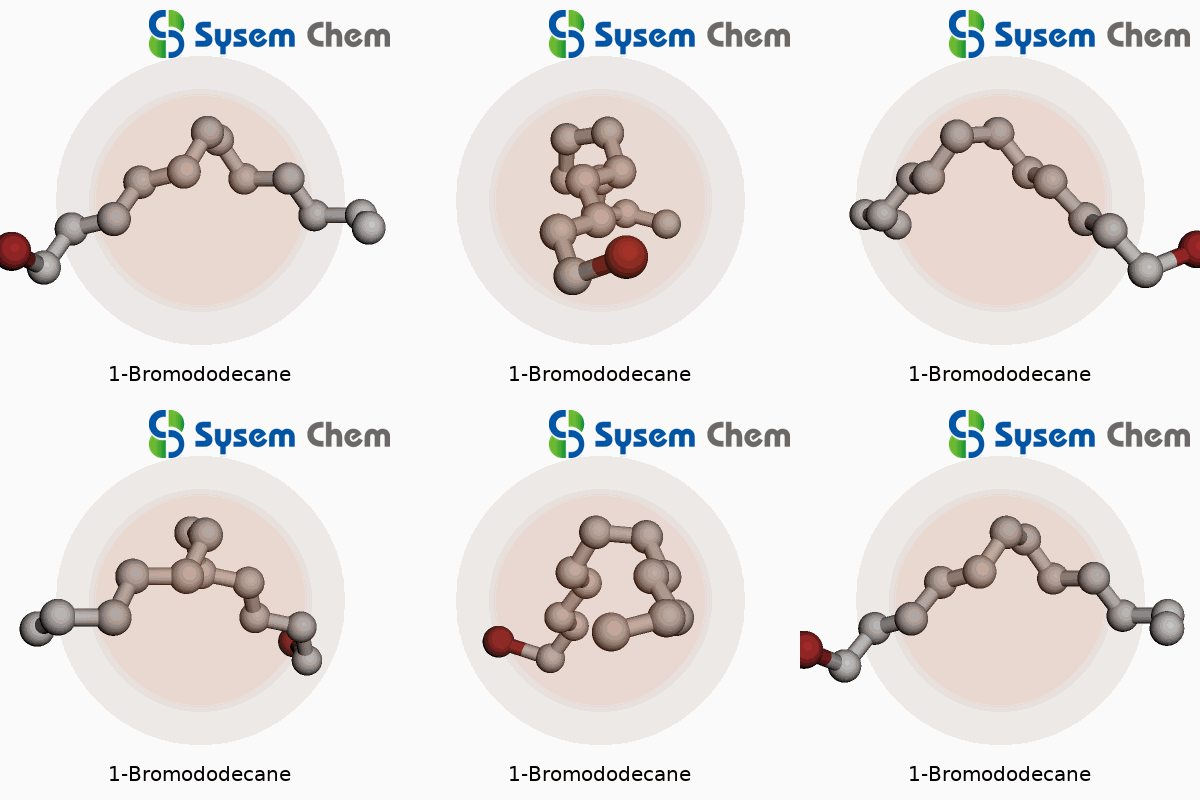
1-Bromododecane belongs to the family of alkyl halides, specifically falling under the monobromo derivatives of dodecane. Chemically identified as C12H25Br, it features a 12-carbon straight chain topped with a terminal bromine. This structure gives it a blend of hydrophobic and reactive traits. Many manufacturers package it in amber glass bottles or sturdy HDPE containers, preserving its purity and protecting it from light. Often found as a clear, oily liquid, it has carved out a role in specialty chemical catalogs. Pharmachemical suppliers, surfactant makers, and academic labs keep it on their shelves for its track record in contributing functional groups, as a synthetic building block, and for its dependable chain length.
Physical & Chemical Properties
1-Bromododecane pours as a colorless to pale yellow liquid that doesn’t like water much. The boiling point sits at about 271-273°C; you need serious heat to vaporize this stuff. Its density is around 1.038 g/mL at 20°C, so you’ll notice it settles below water in a separating funnel. Odor is faintly sweet, almost waxy. It dissolves in organic solvents — think ether, acetone, or chloroform — making it easy to handle within non-polar reaction media. The long hydrocarbon tail fends off most nucleophilic attack except at the terminal carbon, leaving the bromine ready for substitution reactions. In thermal or photolytic conditions, the carbon–bromine bond will break, but the molecule remains stable enough for day-to-day lab use.
Technical Specifications & Labeling
Chemists expect technical documents to list purity, molecular weight, and hazardous symbols. Standard lots offer 97–99% purity, sometimes higher for medicinal or analytical uses. CAS number 143-15-7 uniquely identifies 1-Bromododecane. Labeling typically warns about skin and respiratory irritation with hazard codes like H315 and H332. Packaging calls out the lot number, molecular formula, and storage instructions—namely, keep tightly closed and away from ignition sources.
Preparation Method
Most commercial suppliers rely on methods that add efficiency and minimize side products. The classic lab prep involves treating lauryl alcohol (dodecan-1-ol) with hydrobromic acid in the presence of sulfuric acid, driving a nucleophilic substitution (SN2 mechanism) to replace the hydroxyl group with bromine. Another route runs through phosphorus tribromide (PBr3), which allows for milder conditions and reduces byproduct formation. Industry sometimes prefers using bromine and red phosphorus under controlled conditions. Key variables are temperature, reagent ratio, and water exclusion. The best yields come from controlling these strictly, followed by careful distillation to remove any lauryl alcohol or unreacted starting material.
Chemical Reactions & Modifications
Most users value 1-Bromododecane for its potential as an alkylating agent. The straight-chain structure makes it a favorite in preparing quaternary ammonium salts, which act as surfactants or phase transfer catalysts. Grignard formation works well by reacting 1-Bromododecane with magnesium turnings in dry ether, producing dodecyl magnesium bromide—a precursor to alcohols, acids, and other carbon chains. The bromine acts as a clean leaving group for substitution reactions, allowing nucleophiles such as amines, cyanides, or thiolates to take its place. Lab notebooks get filled with tests on turning 1-Bromododecane into more complex molecules, as its length gives good control over hydrophobicity in new compounds. In polymer chemistry, it serves as a chain-transfer agent or building block for block copolymers.
Synonyms & Product Names
Depending on region or supplier, 1-Bromododecane shows up under plenty of aliases: Lauryl bromide, Dodecyl bromide, and n-Dodecyl bromide top the list. Some literature references draw lines between 1-dodecyl bromide and lauryl bromide, but they all indicate the same linear structure. Chemical catalogs mark it under CAS 143-15-7, offering alternate spellings such as 1-bromo-dodecane or Dodecane, 1-bromo- at times. Application notes might call it “bromolauric alkane” when highlighting its surfactant intermediate uses.
Safety & Operational Standards
1-Bromododecane doesn’t pose the immediate danger of shorter-chain alkyl bromides, but it still requires basic chemical safety discipline. Contact leads to skin and eye irritation, so gloves and splash-proof goggles become standard lab attire. Fume hoods pull away vapors, reducing inhalation risk, as repeated exposure irritates lungs and mucous membranes. Industrial Material Safety Data Sheets spell out storage rules: keep it cool and out of sunlight, as light can slowly break down halide bonds and cause slow decomposition. Disposal requires incineration or chemical neutralization, never down the drain, to keep toxic organobromines out of groundwater. In my own lab work, spills never failed to generate a distinct, lingering scent—reminding everyone not to underestimate even "milder" alkyl bromides.
Application Area
Chemical synthesis stands as the core field. 1-Bromododecane makes life easier for those building longer-chain organics. Specialty surfactants, fabric softeners, and phase transfer catalysts frequently tap this compound as a foundational starting point. The pharmaceutical sector sometimes harnesses it during late-stage synthesis, designing drugs that need hydrophobic tails to cross membranes better. Polymer chemists, too, mix it into their workflows for making new types of block copolymers or toughening agents. Academic research leans on it to probe mechanisms of nucleophilic substitution along long-chain alkanes. On a commercial level, some pesticide and fungicide makers use it as a linker or intermediate, though environmental rules keep this tightly regulated.
Research & Development
Curiosity doesn’t stop at basic substitution chemistry. In my graduate studies, group meetings often circled back to the challenge of controlling regioselectivity in reactions with long-chain bromides. New research focuses on leveraging 1-Bromododecane for greener synthesis paths, for example, swapping out toxic solvents or reducing waste byproducts. In catalysis, engineering teams work on mimicking enzymatic alkylation reactions, where substrate length and reactivity need to match living systems. Emerging reports describe using 1-Bromododecane in making functionalized nanomaterials with precise hydrophobic–hydrophilic behavior, aimed at biomedical carriers or smart coatings. Ongoing funding continues to support the search for more efficient, less energy-intensive ways to harness the versatility of this brominated alkane.
Toxicity Research
Toxicology data continues to shape how manufacturers and laboratories handle 1-Bromododecane. Short-term exposure causes moderate irritation on contact; headaches, dizziness, and mild narcosis can occur with inhalation of vapors at high concentrations. Its long chain, though, means it breaks down slower than short-chain alkyl halides if released into the environment, raising concerns over accumulation in aquatic systems. Ecotoxicity studies flag potential reproductive harm for aquatic invertebrates, pushing the need for strict wastewater controls. Animal studies report low acute toxicity (LD50 oral, rat: >5000 mg/kg), but chronic effects remain insufficiently mapped. Today’s safety guidelines continue to evolve based on new environmental persistence research.
Future Prospects
Looking ahead, the call for more environmentally friendly synthesis and tailored surfactants will likely keep demand for 1-Bromododecane steady. Startup firms and university labs want longer, functionalized chains for new drug delivery systems, bio-compatible materials, or greener pesticides. Green chemistry efforts are driving development of less hazardous bromination routes, recyclable catalysts, and closed-system manufacturing to curb environmental impact. The regulatory focus on organobromine environmental fate could shape how the compound gets used or substituted in the coming years. Broader adoption of sustainable practices could even force manufacturers to pivot, enhancing purification steps or redesigning supply chains. As research into alkyl halide chemistry keeps growing, 1-Bromododecane stands as a molecule whose role adapts—still relevant in the next generation of surfactants, polymers, and beyond.
Digging Into Real Uses
1-Bromododecane doesn’t pop up in dinner conversations. Not a surprise, since it’s a colorless, oily liquid you’re more likely to see in a chemist’s storeroom or a factory than in everyday life. Ask anyone in chemical manufacturing, and they’ll tell you it’s mainly there for its straight, long carbon chain and the bromine atom at the end. That combo opens a door to a whole world of practical uses.
Building Blocks for Better Chemistry
The main job for 1-Bromododecane is as a starting point for other chemistry. Think of it as raw lumber—no one builds houses out of logs they find in the forest, but those logs get turned into everything from beams to shingles. In chemical labs and industry, its structure lets it act as an alkylating agent. Teams use it to put dodecyl groups (that’s a 12-carbon chain) onto all sorts of molecules. Simple as it sounds, this act of sticking a long tail onto a smaller chemical changes everything—solubility, stability, sometimes even biological effects.
Surfing on Science: Surfactant Production
Everybody uses surfactants, whether they know it or not. They’re the stuff in soap, shampoo, and detergents that helps water mix with oil and grime, so it washes right away. Manufacturers begin with 1-Bromododecane to make dodecyl derivatives, key ingredients for synthetic surfactants. This compound brings water-hating properties, helping create surfactants that can find their way into a million products from dish liquid to industrial cleansers.
Pharmaceutical Ingredients Start Here
In the world of medicinal chemistry, 1-Bromododecane helps researchers build molecules you find in drugs. One real example is the modification of drug candidates to cross cell membranes more easily. That long, oily dodecyl chain can make a molecule more 'fat-friendly', letting it move through the body differently. Researchers use these reactions to tweak properties and give molecules a leg up in battling disease.
Material Science Gets a Boost
Sometimes, 1-Bromododecane ends up in the world of plastics and polymers. It adds length and flexibility to building blocks that turn into synthetic lubricants, specialty plastics, and coatings. By changing what’s attached to the main chemical chain, engineers find new ways to control slippery properties, strength, or weather resistance. I’ve watched old factory lines switch to new dodecyl-based additives and seen cleaner pours, less residue, and products that last longer outdoors.
Environmental Footprint and Handling
The use of halogenated compounds raises some red flags on safety sheets. 1-Bromododecane can cause skin and eye irritation, and it doesn’t smell pleasant. Environmentalists worry about its persistence and impact if released in large amounts. Factories and labs need to contain spills, filter emissions, and dispose of waste according to strict rules. It’s a relief that most producers now invest in ventilation, protective gear, and staff training, but regulations still need teeth and real enforcement.
Future Directions and Safer Chemistry
Chemists think about green chemistry, searching for bio-based alternatives, or ways to phase out halogenated compounds where possible. Using 1-Bromododecane responsibly means more than ticking a box on a safety form. It calls for innovation and stronger checks on how these molecules get used and where the waste ends up. Companies that take this seriously stand to build trust with everyone downstream—from workers to consumers.
Chemistry That Pops Up in Everyday Life
Most people don’t spend much time thinking about molecules like 1-Bromododecane, but these building blocks shape more than chemistry homework. I remember watching my high school science teacher walk across the lab, holding a bottle with words I could barely pronounce. That day, the lesson was about organic compounds and their impact far outside the classroom.
Calling Out the Formula
For 1-Bromododecane, the formula is pretty simple once you break it down. This compound falls into the family of alkyl halides: long hydrocarbon chains with a single bromine atom attached. Dodecane, as the name suggests, has twelve carbons. Hook one bromine at the end, and you get C12H25Br. There’s a kind of elegance to that formula—a straight chain, a clear identity. People in chemistry look for these details because they hint at reactivity, uses, and risks. I’ve seen students confuse these formulas, but the pattern sticks once you spot it: “dodeca” means twelve, add bromine, subtract a hydrogen, and the answer unfolds.
Beyond the Lab Bench
Thinking about 1-Bromododecane only through its formula misses the bigger picture. This compound shows up in places most people don’t expect. It’s used to make surfactants, which turn up in cleaning products and even shampoos. I spent a summer working in a small chemical plant, and a product line manager told me about the steady demand for these types of specialty chemicals. The market for simple alkyl halides only grows as manufacturers chase after more efficient and greener ways to make detergents and specialty fluids.
Working with these chemicals brings its own risks and rewards. That one bromine atom adds heft and reactivity. Safety protocols jump up a notch compared to plain dodecane. I remember the plant’s safety officer making a point about proper ventilation and gloves, since halides can sting or burn if handled wrong. Facts back up that caution: alkyl bromides, including 1-Bromododecane, show moderate toxicity. That means careful storage and controlled usage, especially in labs and factories.
Why Accuracy Matters in Chemical Formulas
Mistaking a chemical’s formula can bring real consequences. Swapping around an atom changes everything. The formula C12H25Br ensures suppliers, researchers, and regulators talk about the same substance. My own experience with quality control showed how a mislabeled drum caused headaches for logistics, delayed batches, and triggered safety reviews. There’s a lesson there, backed by industry data: accuracy isn’t an option, it keeps projects on time and people safe.
Solutions and Progress for Safer Chemistry
To lower risk, chemical makers and labs invest in digital tracking and better labeling. QR codes, automated documentation, and safety training fill in gaps where human error creeps in. Industry standards push for full disclosure on safety sheets and containers. It’s a team effort across supply chains. The push for greener substitutes prompts experimentation too, with bio-based surfactants growing in interest. While 1-Bromododecane remains important today, the world keeps hunting for ways to make chemistry safer for workers and the environment. My years around the industry taught me that every formula, like C12H25Br, has a ripple effect far beyond a textbook answer.
Getting Real about 1-Bromododecane
1-Bromododecane looks like a harmless clear liquid, but just because it’s not a household name doesn’t mean it’s free from hazards. This compound shows up in lab settings, factories, and chemical supply chains. I remember flipping through chemical safety manuals during my time in a research lab, wondering if “long-chain” organics like this one justify the same strictness you’d give something with a reputation like benzene or mercury. Turns out, respect stays the best policy.
Breaking Down Its Hazards
1-Bromododecane acts as an irritant. Accidentally letting it touch your skin or eyes can sting and redden tissue. A careless spill on your hands leads to dry, cracked skin, like chlorine but oilier. Breathing in vapor isn’t pleasant either; it may not knock you out instantly, but it irritates the nose, throat, and lungs.
Many organobromine compounds have built significant reputations for toxicity, especially regarding chronic exposure. Some older studies suggest this class of chemicals can have unpredictable effects on the nervous system and disrupt hormone signaling if exposure sticks around for years. Isolated animal studies hint at problems with liver and kidney function, though real-life risk often depends on how and where you work with the stuff. Long-term epidemiological studies for dodecyl bromide aren’t common, so it helps to err on the side of caution.
Fire and Environmental Impact
Not many people think of these compounds as flammable, but 1-Bromododecane can catch fire at high temperatures. Its vapors can form explosive mixtures in the air, and the combustion products are often much nastier than the starting material. Anyone who’s seen a chemical fire knows the threat stretches beyond the initial flames—smoke chokes and chemical runoff contaminates groundwater.
On the environmental side, 1-Bromododecane doesn’t belong in waterways or soil. Brominated compounds break down very slowly, persist in ecosystems, and move up the food chain. The build-up of similar chemicals in marine life has raised alarms among scientists and regulators for years. While direct data on this specific compound runs thin, the chemistry points to caution, not complacency.
Staying Safe
In a good lab, nobody picks up a bottle of 1-Bromododecane without nitrile gloves, goggles, and a fume hood. Ventilation matters—a whiff here and there might not cause harm today, but people don’t line up to find out what chronic exposure brings. Any chemical like this comes with an MSDS (Material Safety Data Sheet), and ignoring it has led to mishaps more times than I care to count.
Regulation requires companies to limit worker exposure and prevent emissions. OSHA and the EPA both step in if rules are ignored. Good science practices—labeling, spill kits, and trained staff—go further than rules alone. Mistakes shrink when people respect the risks, not just the regulations.
What the Public Should Expect
The average person won’t find 1-Bromododecane under their kitchen sink. Still, its risks linger in the background where chemicals flow in manufacturing. Watching regulators, demanding transparency from chemical suppliers, and pushing for safer alternatives creates a cleaner, safer world for everyone. If we want to keep trust in science and industry, handling these substances with care isn’t negotiable—it’s the foundation for real safety.
Why Proper Storage Matters
Sneaky chemical spills usually don’t grab headlines, but bad storage can ruin months of work—or, worse, put people in real danger. Ask anyone who’s opened a cabinet and caught a whiff of something they weren’t supposed to smell. I’ve handled my fair share of chemicals, from easy-going solvents to stubborn, fuming liquids. 1-Bromododecane has its quirks. You don’t want to crack open a bottle and find it changed texture, color, or worse—reacted with something in the air. Mishandling these kinds of compounds costs time, money, and sometimes someone’s health.
Understanding the Risks
1-Bromododecane looks simple at a glance. It’s colorless, oily, not especially volatile in the way acetone or ether can be. You could be lulled into thinking it’s safe to stick anywhere there’s a free spot. That can get a lab into trouble. This chemical reacts with strong bases and oxidizers. It’s also a skin and respiratory irritant, so accidental contact or fumes can set off reactions you don’t want to deal with. Chemists far more experienced than me have ruined gloves, lab coats, even countertops by being careless with storage.
Choosing the Right Spot
Proper storage calls for more than just a label and a shelf. Cool and dry means just that—don’t stick it next to a window, heat lamp, or radiator. Heat speeds up breakdown. High humidity doesn’t do it any favors. A chemical storage cabinet, especially one set aside for halogenated organics, does the job. I learned early on to double-check where oxidizers are stored—mixing those in the same cabinet asks for trouble.
Keep Containers Tight
Leaks and evaporation lead to ruined samples and surprise fumes. Laboratory bottles with screwed-on caps or glass stoppers work. Plastic wrap or slap-dash lids have ruined more bottles than I can count. Never use containers that aren’t chemically compatible—some plastics slowly break down, turning storage into a mess. I once found brominated residue eating its way through thin plastic in a shared fridge. Glass containers last a long time and don’t react, assuming no wild temperature swings.
Clear Labeling Saves Time
Nothing slows a lab down like a mystery bottle with faded marker. Labels should show product name, date received, concentration, and who opened it last. I hated sorting uncategorized vials in my student days. Now, a clear label means easy audits and safer handling; no one needs to ask “is this expired?” or “what is this, anyway?” mid-experiment. It’s one of those small things that keeps chaos at bay.
Emergency Precautions
Accidents find their way into the best-run labs. A working fume hood means spills won’t turn into hazardous clouds. Emergency eye-wash and gloves should never be out of reach. Good habits—like checking for leaks and making sure bottles are upright—cut down on cleanups. I once walked into a sticky puddle under a shelf. One loose cap, and the mess stuck around for weeks.
Better Lab Culture, Better Results
Good storage comes down to respect. For the materials themselves, for the lab, and for the people who share the space. 1-Bromododecane isn’t the most dangerous thing I’ve handled, but lazy practices can trip up even seasoned staff. Careful storage makes research smoother, troubleshooting rare, and trust between coworkers stronger. It isn’t glamorous, but it’s the backbone of safe, productive science.
Getting to Know 1-Bromododecane
You find this compound turning up in chemical labs, industrial syntheses, and specialty formulations. The formula, C12H25Br, hints at a simple but useful structure: a straight twelve-carbon chain capped with a bromine atom.
Slippery Liquid, Defying Easy Cleanup
Pick up a vial of 1-Bromododecane and you’ll notice a clear, oily liquid at room temperature. It doesn’t evaporate fast from your hands or benchtop because it resists letting go of its molecules. The boiling point sits around 275°C. That’s much hotter than water or lighter alcohols. The melting point sits close to 27°C, which explains why it might be solid in a chilly storeroom but pourable on a summer’s day.
No Fan of Water
Pour some into a glass of water, it floats and forms slick beads. The hydrophobic tail refuses to mix or dissolve. Its solubility remains extremely low, less than 0.5 mg in a liter. That makes it handy for workers trying to layer chemicals or extract organics—no one worries about it contaminating the water supply simply by dissolving away.
Thicker Than Most Solvents
Try to pipette 1-Bromododecane and you’ll notice some drag. Its viscosity feels more like light oil than your usual solvents. If you’re working with equipment that requires precise measurement or automated mixing, that slower flow rate matters. In chemical reactions, higher viscosity can mean longer mixing times and slower diffusion. Techs in the lab adjust their technique or automate processes with that thickness in mind.
Where Safety Meets Chemistry
Grab a safety sheet and you’ll notice its density hits about 1.04 g/cm3. It sinks below water, so spills tend to pool rather than float away. It rarely catches fire; the flash point sits over 110°C. So fire hazards take a back seat to concerns about skin contact or inhalation. Brominated organics can irritate or sensitize some people. Gloves and fume hoods become basic precautions—not just for show but for real day-to-day protection.
Uses Driving Demand
Manufacturers rely on 1-Bromododecane as a starting point for building more complicated molecules, including surfactants and specialty lubricants. The long carbon chain brings slipperiness and durability, favored in industrial surfactant manufacture. Labs often use it to map out organic reactions or tag molecules for easier tracing.
Potential Problems: Environment and Waste
The real-world issue with this compound often comes down to disposal and environmental persistence. It resists breaking down in soil and water, which brings up the risk of ecological accumulation. Workers need solid protocols for handling waste—separating used solvents, labeling containers, and sending off for chemical disposal rather than pouring anything down the drain. Research into greener alternatives and less persistent brominated compounds draws the attention of industry groups trying to reduce environmental impact. Landfills and waterways cannot keep absorbing slow-degrading solvents without someone paying attention.
A Look Toward Safer Handling
Everything about 1-Bromododecane—from its slick surface to its stubborn persistence—calls for respect in the workplace. Simple habits like recording spills, using goggles, and double-checking waste bins add up. For teams in the lab or on the production floor, sharing knowledge about properties and risks can tip the balance between a routine workday and an urgent cleanup. Training new staff, encouraging open communication about exposures, and sharing fact-based reports go further than any technical manual.